

Careers that fly higher: 5 reasons to join J&J Aviation
"There's something really special about transporting our executives, doctors and scientists—putting them in a position to do the research and work that they need to do," says Jared T., Chief Pilot at Johnson & Johnson Aviation. Here are five reasons to join him.
1. Mission-driven work
Developing the next generation of smarter, less invasive, more personalized treatments. Discovering innovative medicines and therapies to address unmet medical needs. It's all part of the mission at J&J—and everyone on the team shares it—but aviation professionals specifically help:
- Advance health innovation by connecting J&J’s leaders with partners, policymakers and other stakeholders
- Ensure senior executives reach key sites safely and efficiently so they can collaborate to address unmet health needs
- Strengthen supply chains, enhance emergency preparedness and improve access to medicine around the globe
And while every successful inspection, takeoff or landing is a move in the direction of better health for millions, you'll also touch the lives of special individuals when you join us. As a member of the Corporate Angel Network, we use our empty seats to provide free air transportation for people with cancer traveling to and from treatment.
2. Cultures of precision and safety
Both aviation and healthcare are built on technical precision in the service of safety.
ATP-rated pilots and FAA-licensed A&P technicians live by the idea that their work protects others—that they’re responsible for the lives of the people they serve.
Safety isn’t a box to check; it’s a promise made to each passenger.
Everyone at J&J lives by a similar duty of care, defined in our Our Credo: “Our first responsibility is to the patients, doctors and nurses, to mothers and fathers and all others who use our products and services”—the people we serve.
This is a natural alignment, with precision as a shared language of care. Viewed in this light, how we manufacture next-generation biologics isn't so different from how you ensure safety in the air.

3. Advanced aircraft, advanced technology
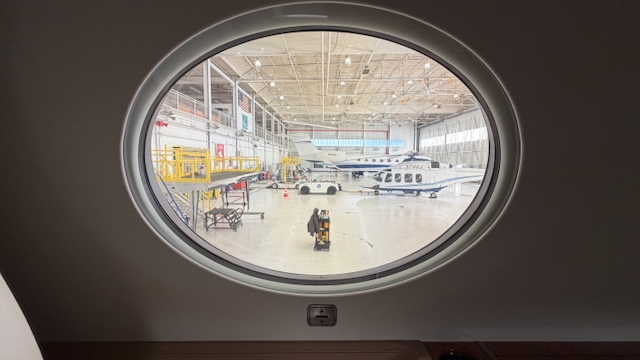
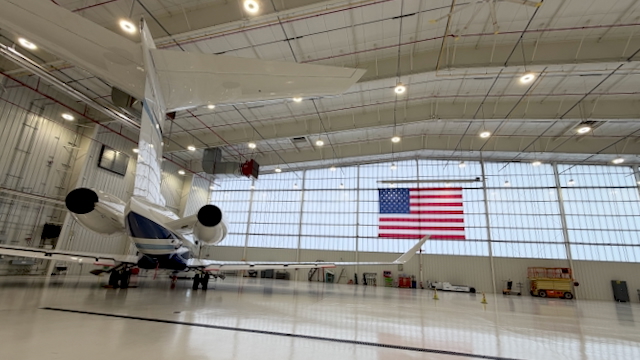
Mission and culture aside, what’s inside the hangar at J&J Aviation? Our fleet includes:
- Gulfstream G650ER
- Gulfstream G600
- AgustaWestland AW139 helicopter
As for the flight deck, our pilots operate advanced flight-deck avionics with precision navigation systems.
When you join them, you’ll also gain access to our in-house flight simulator for safety training and compliance—a fully qualified SF-50 (Cirrus Vision Jet) Full Flight Simulator certified under FAA Part 60, which includes a comprehensive worldwide visual database (e.g., navigation data, charts, terrain, 3D airport sceneries).
On the maintenance side, our engineers work with predictive diagnostics, use the latest aircraft inspection (AI) tools and coordinate OEM partnerships to ensure every component is performing perfectly.
4. Small-team synergy, big-time growth opportunities
At a major airline, you might not meet the mechanic who signed off your airplane—or for that matter, the flight attendant or flight engineer who’ll work your next leg.
On the aviation team at J&J, you’ll know every person in the hangar, every name on the flight manifest and every business jet by its serial number. When things go well, everyone feels it. When there’s a hiccup, everyone owns it. It’s a culture of mutual accountability and pride.
Being on a close-knit, multi-disciplinary team also facilitates learning. For example:
- Our pilots gain exposure to the latest in aviation safety and compliance standards as well as leadership training
- Our engineers participate as active flight crew members, occupying jump seat position for takeoff and landing
- Everyone sees the full arc of mission execution, from the hangar to the cabin door
On top of that, you’ll be backed by the great employee benefits at J&J when you join us, which include military and first responder time off, parental leave, tuition reimbursement for offsite learning, CAM certification opportunities, plus a whole lot more.

5. Stewardship, not standardization
In the military or airline worlds, standardization is essential—it ensures safety, reliability and efficiency. It’s why pilots fly the same routes in the same aircraft types, and maintenance engineers follow the same procedures every day.
But when you’re a member of our Part 91 flight department supporting J&J, it’s a slightly different story.
You’ll still follow strict FAA and IS-BAO standards, of course. But rather than standardization, which ensures safety through procedural uniformity, you’ll find a culture of stewardship, which not only ensures safety but delivers excellence through an emphasis on personal ownership.
For pilots, this means handling everything from flight planning and routing to fuel choices, alternates, passenger preferences and onboard experience. There’s less external oversight, but greater expectations in terms of judgment, presentation and foresight.
For maintenance professionals, it means deep stewardship of a few aircraft, not thousands. It means knowing the unique “personality” of each system, data point and sound. And it means that decisions are made face-to-face—the first step you’ll take when technical issues arise isn’t to file a ticket, but toward a teammate so you can fix it yourselves.
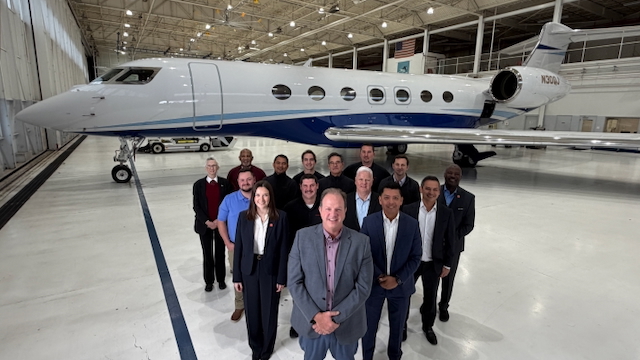
Chart a new flight path
Ready to join a Fortune 50 flight department where we invest equally as much in our planes as our people?
The first step is to join our aviation talent community. It’s a great way to stay in touch, connect with recruiters and aviation professionals at J&J—and even get updates about new opportunities as they become available.
Similar posts
Stay updated with the latest news, insights, and stories from Johnson & Johnson.

Career transition Q&A: From the hospital to the electrophysiology team at J&J
After seven years in nursing, Marco P. made the move to electrophysiology at J&J. Why he transitioned—and what he’s learned—might inspire you to join him on our team.

What does an electrophysiology Associate Clinical Account Specialist do? 4 insights from a J&J recruiter
What does an electrophysiology clinical account specialist do at J&J? Get insights on electrophysiology (EP) careers, training, skills and job requirements from a recruiter on our team.

3 ways AI can help you prepare for your healthcare or corporate job interview at J&J
Our hiring teams and recruiters share interview tips, sample prompts and ideas for how candidates can use AI effectively—and where it matters most to keep it human.

Early-in-career programs at J&J: Internships, apprenticeships, co-ops and LDPs explained
Learn more about internships, co-ops, leadership development programs (LDPs) and apprenticeships at J&J for help finding the right student opportunity to launch your career.

Medical Affairs Q&A: Hiring insights from a senior leader at J&J
A leader from J&J's Medical Affairs Oncology team based in Australia shares hiring insights, skill-building advice and interview tips to help you find your next role at J&J.

Q&A: Applying generative AI to R&D innovation at J&J
Four years out of grad school, Pooja S. is at the forefront of her field: applying advanced generative AI to drive breakthroughs in R&D. Find out what motivates her today—and what brought her to J&J—in this informative Q&A.
Join our Global Talent Hub
Wherever you are in the world or your career, we want to get to know you! Sign up for our talent community and share your career goals—it’s the first place our recruiters look when they have a new role.
